degenBTC is the token mined by the MineBTC game loop. Rounds distribute it, transfer tax recycles it, protocol fees buy it back, and each four-hour cycle adds permanent liquidity before country rewards settle.
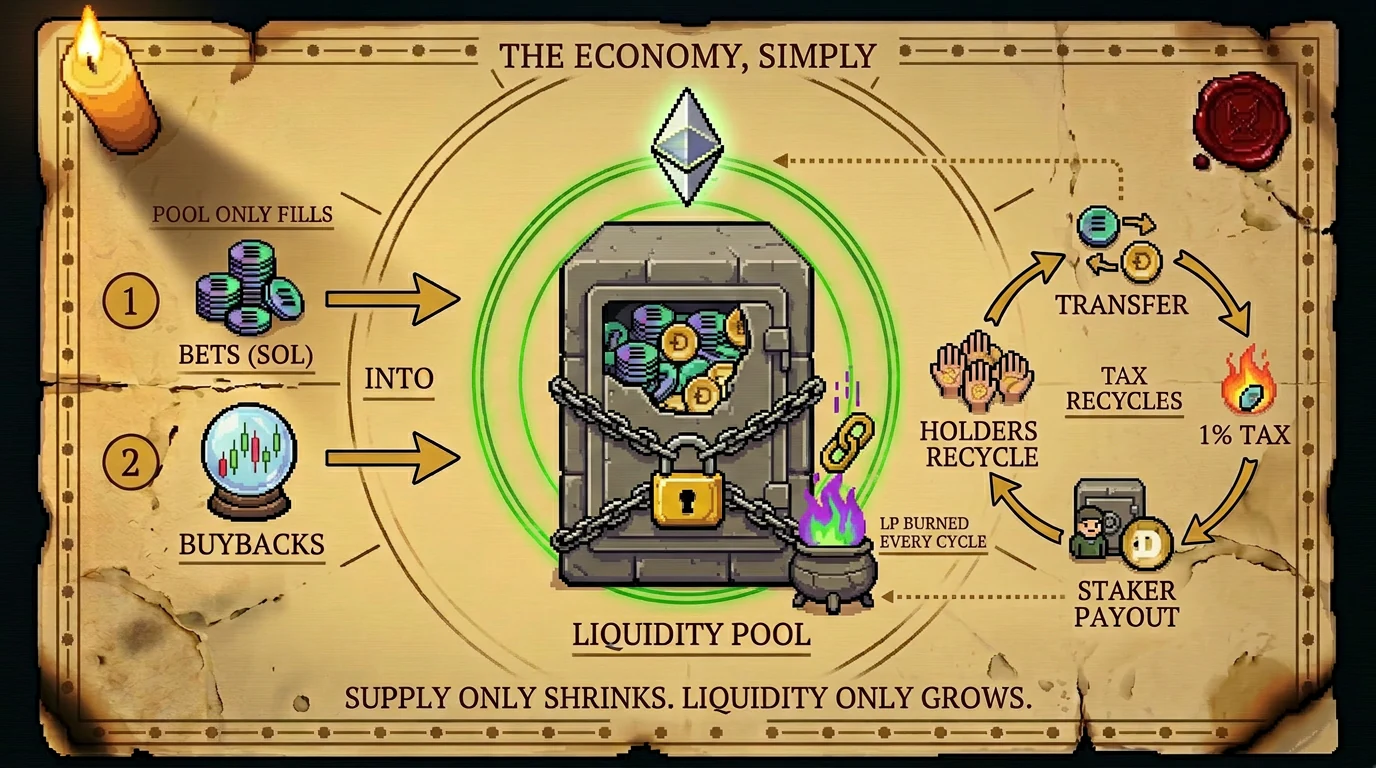
The economy has two jobs. First, game SOL deepens the Raydium pool: the protocol buys degenBTC, pairs liquidity, then burns the LP receipt. Second, Token-2022 transfer fees route into burn, country treasury, and mining-vault recycle paths. The important flows are visible on-chain.
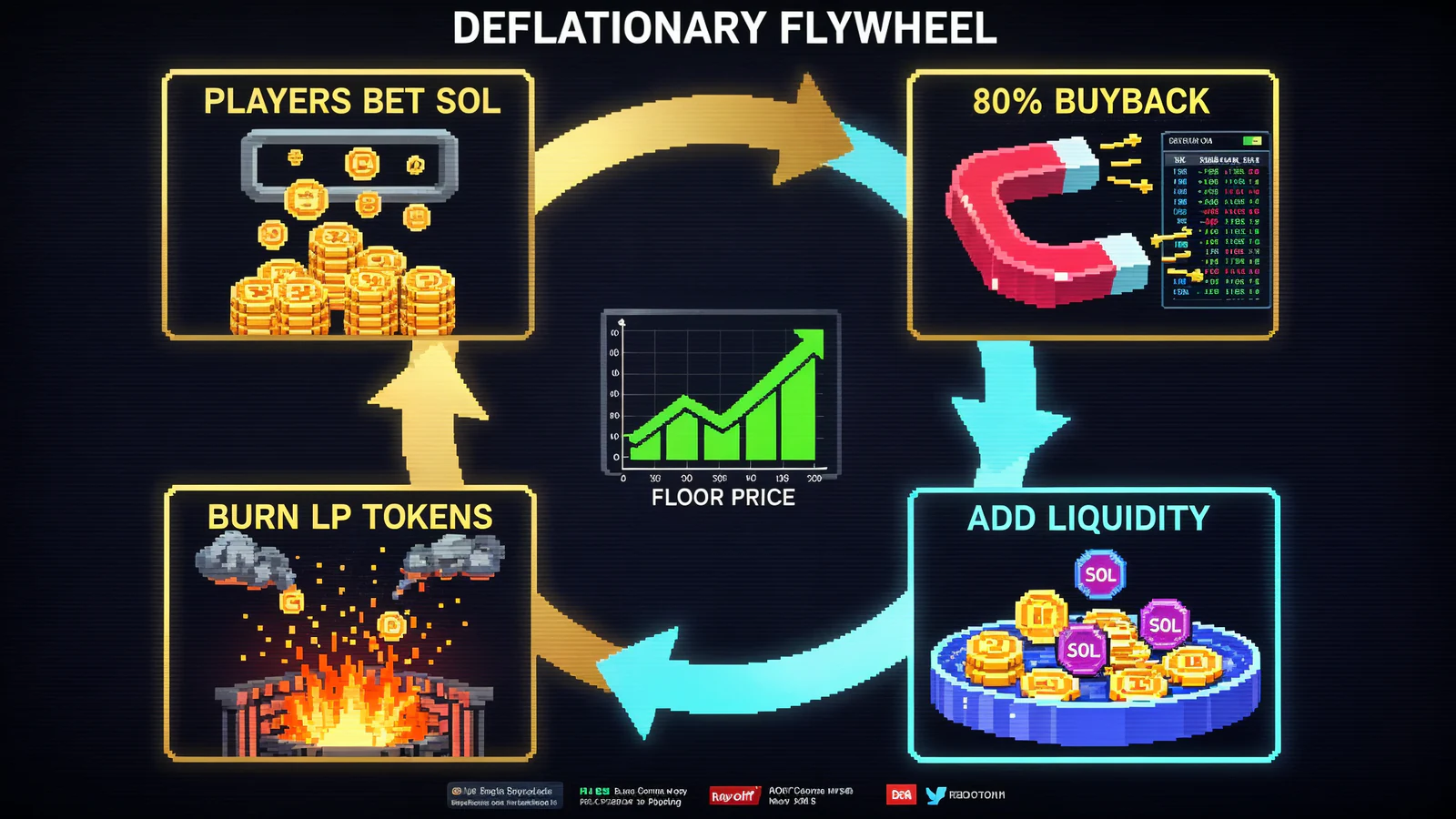
The loop is simple: bets create SOL flow, protocol fees buy degenBTC, emissions retune from price movement, new LP is burned, and the country cycle settles. Then the next round starts with deeper liquidity and a fresh reward state.
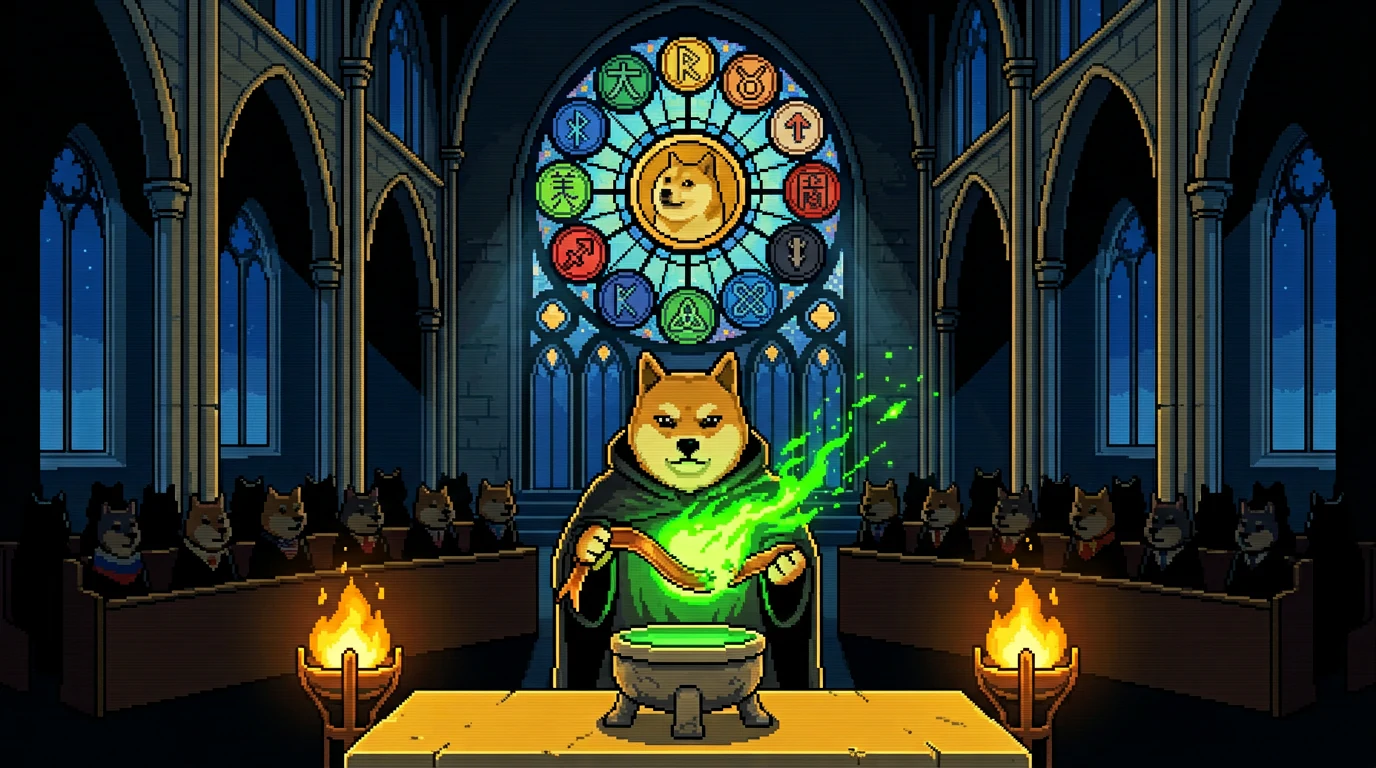
Every cycle burns LP. The protocol pairs SOL and degenBTC, deposits fresh Raydium liquidity, then burns the LP receipt. That liquidity cannot be withdrawn, and the same cycle boundary is used to settle country rewards.
Supply
degenBTC is a Solana Token-2022 asset with a hard-capped supply of 2.1 billion. The mint authority is revoked at launch. New gameplay rewards come from the pre-funded mining vault, which distributes into rounds, cycle payouts, and staking lanes. Supply can shrink through Token-2022 tax burns and LP burns.
Where your SOL goes
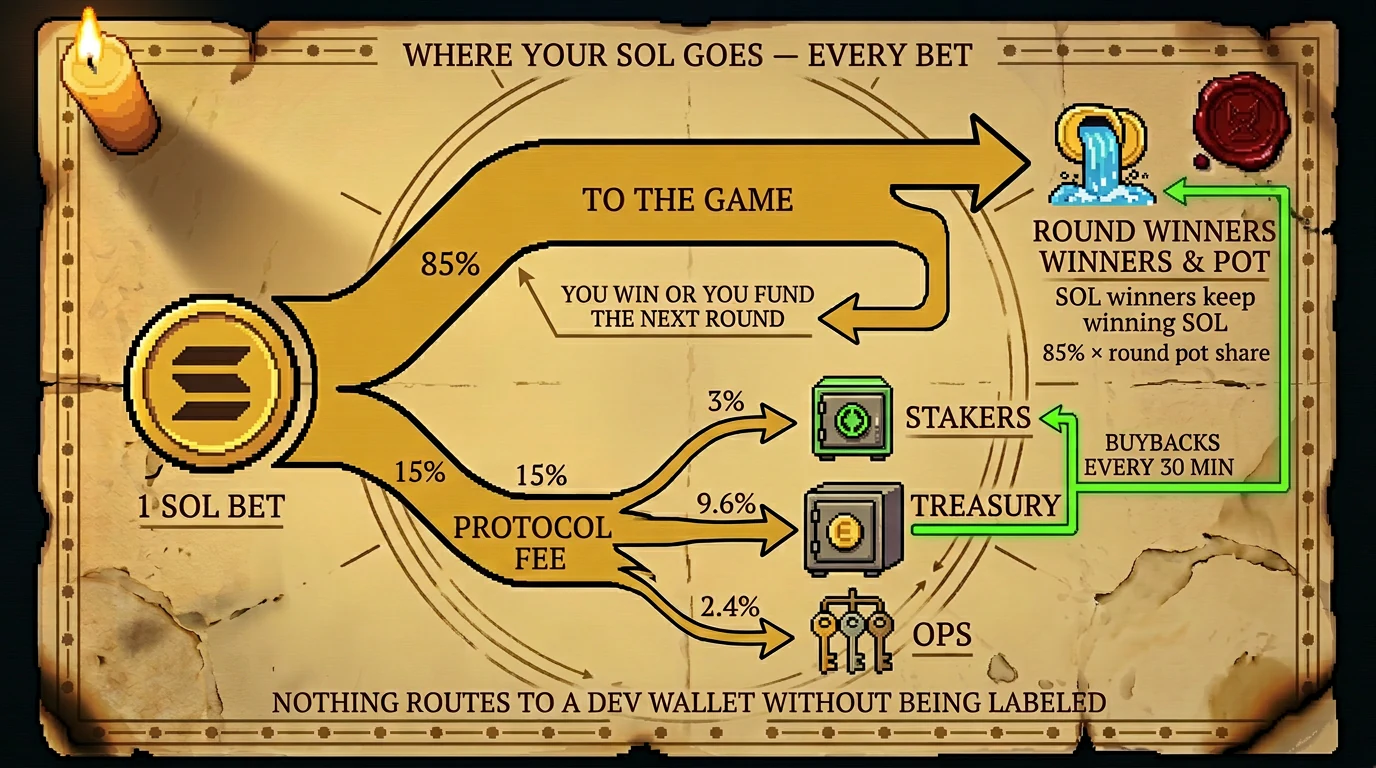
Every SOL bet pays a 15% protocol fee. 10% of that fee, equal to 1.5% of the gross bet, routes to the SOL staker vault. A separate 5% of the gross bet goes into the cycle SOL pool. The remaining round-side SOL becomes the live prize pot, while treasury SOL funds buybacks and the LP add-and-burn cadence.
Treasury distribution also sends a default 3% to NFT market making through the inventory sweep vault. That SOL can buy cheap HashBeast listings through permissionless sweeps. Inventory then moves through the same on-chain paths: lootbox queue, relist, or burn.
The app also tracks per-country compute budgets from collected dev fees. Countries that drive more play can earn more room for AI-generated updates, mutation media, and future content loops.
The flywheel
Snapshots run every 30 minutes. Each snapshot spends part of treasury SOL buying degenBTC on Raydium. That buy also records the price used to retune emissions. After eight snapshots, the cycle can adjust rewards: +1% when price is up enough, −3% when price is down enough. Rates tighten faster than they loosen.
The cycle closes with fresh SOL + degenBTC paired as LP into the pool, then the LP tokens are torched. Liquidity is locked forever. That same burn settles the hash cycle, opens reward claims, and the next bet starts the cycle over.
Every step is permissionless on-chain. Anyone can call snapshots, rebalance, or the LP burn. Cranker bots do the routine work, but the instructions are public.
What's already locked
- Mint authority revoked. Nobody can mint another degenBTC.
- Launch LP burned. The initial pool's LP tokens went up in flames at deploy.
- Every cycle LP burned. Every four hours, more LP gets paired and torched forever.
- Transfer tax frozen at launch. 0.1% on every move, enforced at the Solana Token-2022 level — not the app.
The token-level authorities are removed at launch. Program-level reward routing is visible on-chain and should be governed intentionally as the system matures.
Why it matters
More action means more buybacks, more LP burned, more transfer-tax volume, more SOL in the reward loops, and more data for the emission controller. The game is designed so attention, play, and liquidity reinforce each other.