Round starts, round endings, round settlement, cycle settlement, economy snapshots, LP burns, tax cranks, floor sweeps, and user claims can all be moved forward on-chain by keepers or players.
MineBTC is already built like a public game machine. Most live transactions can be cranked by anyone; only config updates are still managed by the team while the economy is fresh.
Current state
The team still manages config knobs: fee splits, tax routing, staking parameters, game tuning, HashBeast settings, and pause controls. The goal is to move these updates into governance once the live economy has enough data.
Governance layer
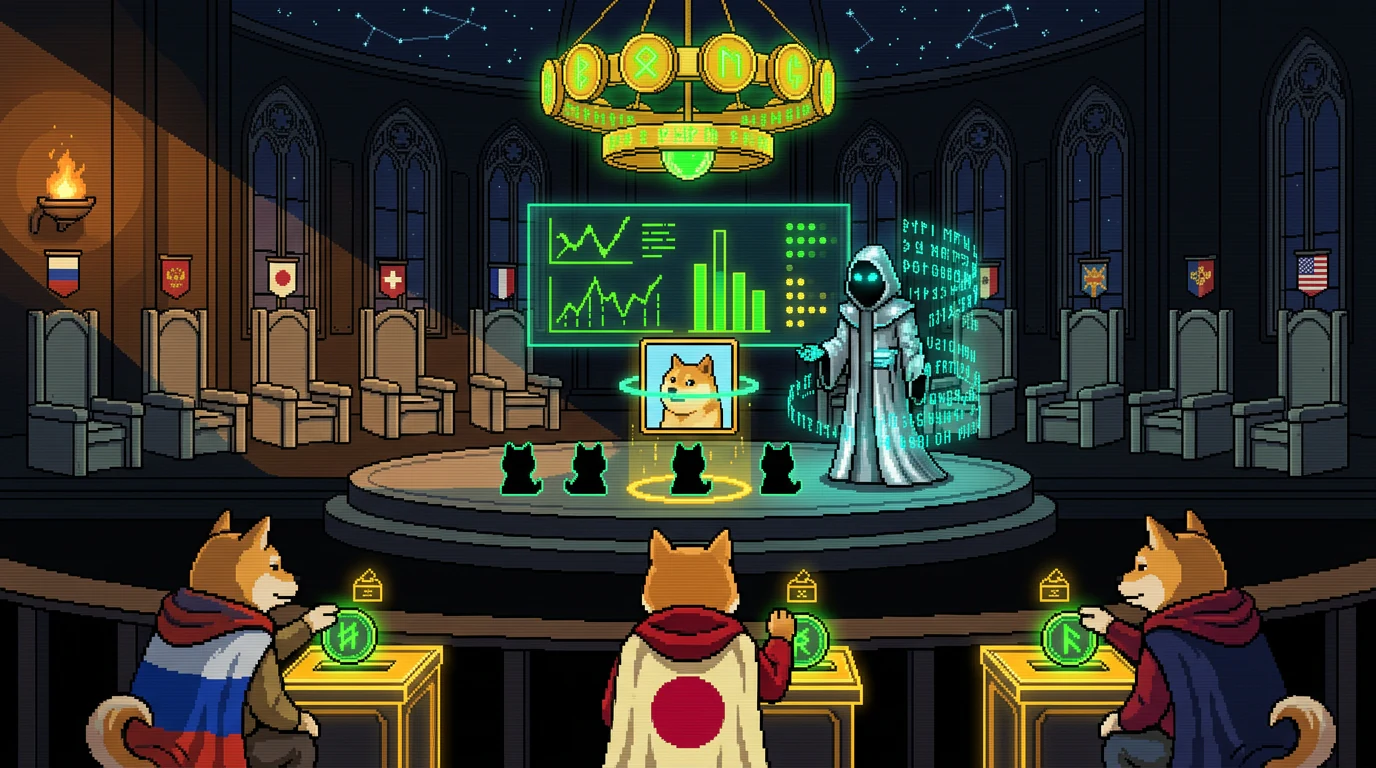
On-chain governance is meant for config updates, not vibes. Fee splits, emission thresholds, staking curves, country-cycle tuning, HashBeast parameters, marketplace rules, and AI budget guardrails should become proposal-driven.
Voting power should come from hashpower: staked degenBTC, LP stake, and HashBeast boosts. If you put more hashpower into the game, you get more voice in how the machine evolves.
Autonomous AI game protocol
The long-term target is not a slow committee. It is an autonomous, AI-managed game protocol. Players use hashpower-backed votes to pass goal prompts: grow a country war, launch a campaign, tune retention, make new content, or run a game experiment.
The game economy already funds its own compute budget — that is what renders Hashiden today. Longer term, the same budget can be used by agents to run content experiments, support new game modes, and keep improving the protocol inside governance-approved limits.
Short version: permissionless operators keep the machine alive, governance controls the knobs, and the AI agent spends compute on growth.