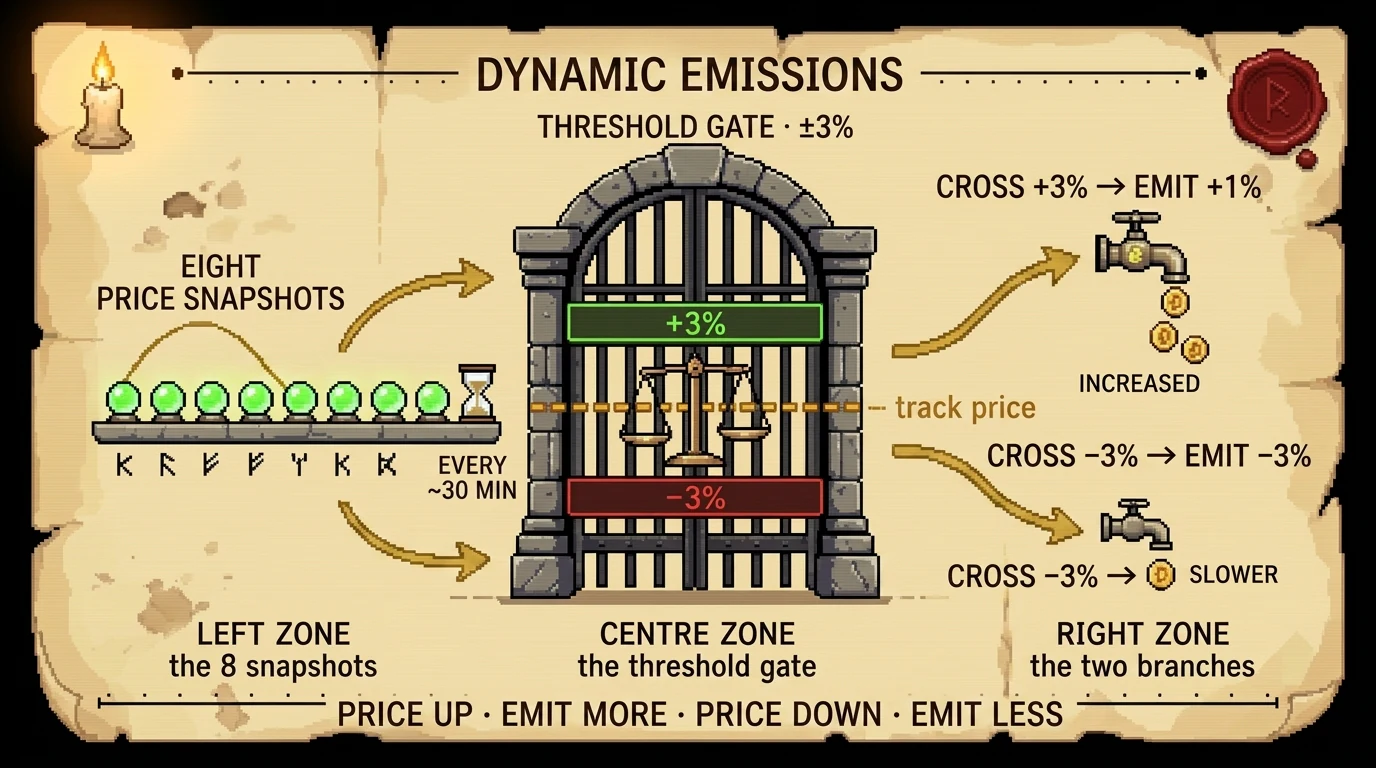
Mine Boost is the market-aware reward engine behind Casino Rolls and the Country Race. Every 30 minutes, an on-chain snapshot buys degenBTC on Raydium and records the observed price. After eight snapshots, the protocol can retune emissions.
Why dynamic
A fixed mining rate ignores market conditions. MineBTC uses real on-chain price movement to tune Mine Boost. If price moves up enough, emissions can rise by 1%. If price moves down enough, emissions can fall by 3%.
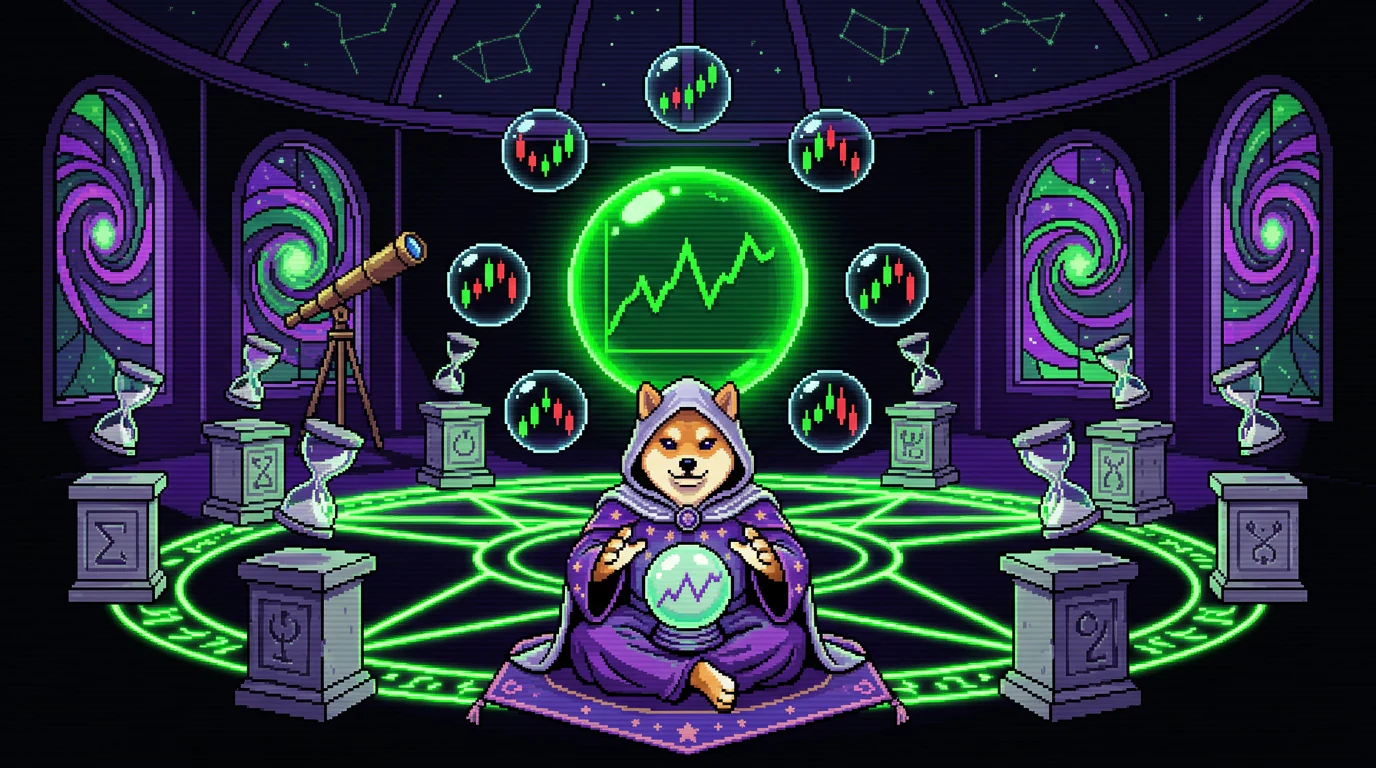
Snapshots are real buys. The protocol does not only read a price. Each snapshot spends treasury SOL on Raydium, records the observed price, and feeds that data into the next emission update.
The snapshot cycle
A Country Race is eight snapshots, roughly four hours total. Each snapshot reads the live Raydium swap price by making a real buy. Some SOL is also earmarked for the LP pairing at race close.
Once the eighth snapshot lands, anyone can trigger the rebalance. That step takes a weighted average of the snapshots, compares it to the race reference price, and only retunes the mining rate if the move is large enough. Small noise is ignored.
None of these steps need a privileged keeper. Cranker bots run them for a small kickback, but any wallet can call them.
Protocol-owned liquidity
At the end of every Country Race, earmarked SOL gets paired with degenBTC at the live pool ratio, deposited into Raydium as fresh liquidity, and the resulting LP tokens are burned. That liquidity cannot be withdrawn.
This is how gameplay becomes market structure. The game collects fees. Fees buy degenBTC. Buys inform emissions. The race adds and burns LP. The next Casino Roll starts with deeper liquidity.