Genesis first
Breeding opens after genesis supply sells out, so it does not compete with primary mint.
HashBeasts are designed to keep moving. Rebirth lets owners cash out stored dBTC, breeding controls new supply after genesis, and the marketplace/inventory loop routes assets into lootboxes, relists, or burns.
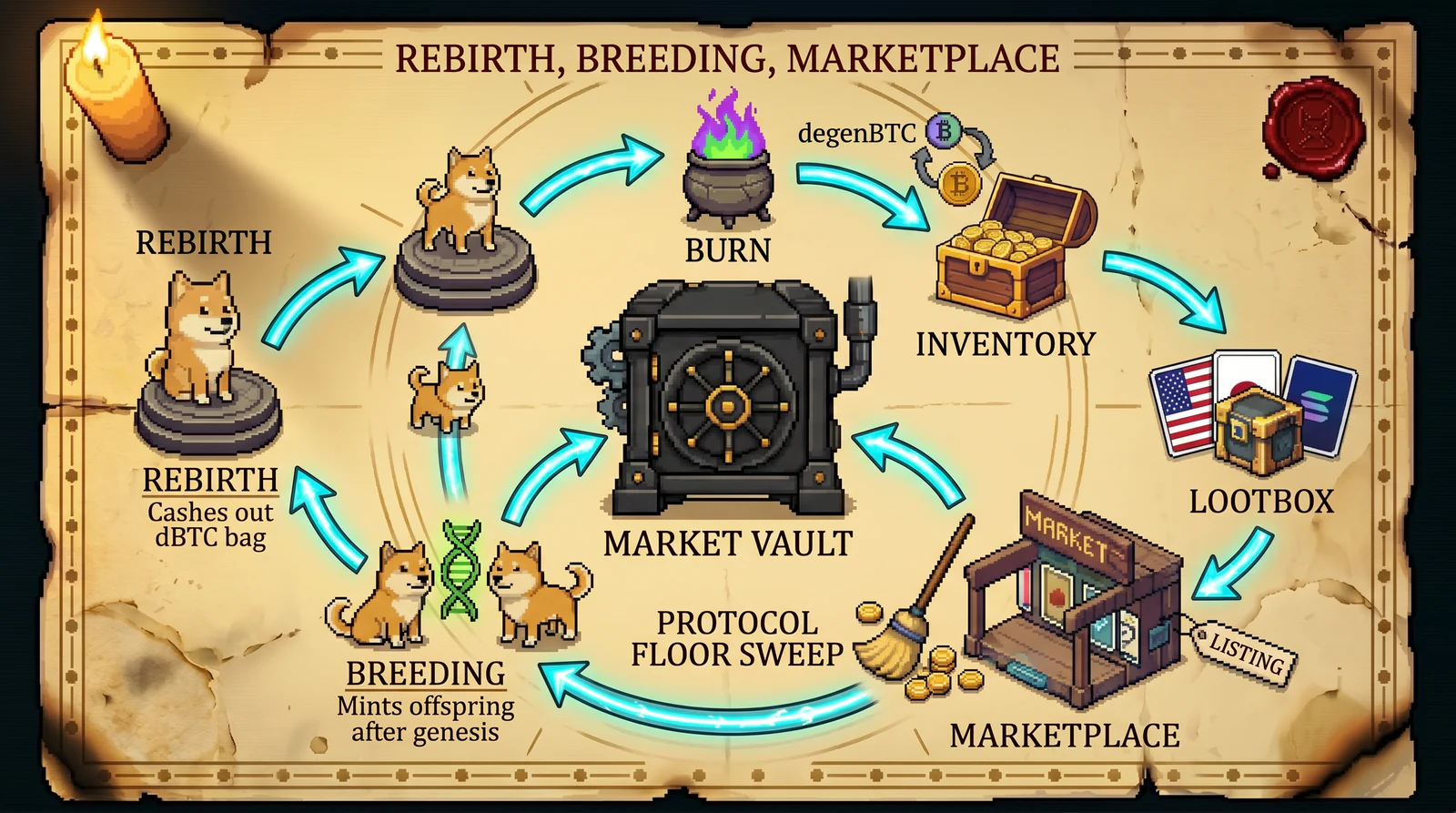
When an owner rebirths a HashBeast, the contract pays out the dBTC stored inside the NFT. Then the asset resets: fresh DNA, XP cleared, gameplay state cleared, multiplier reset, breed state reset, and rebirth generation bumped.
If the rebirth count is below 7 and inventory has a valid path, the asset can recycle into future lootbox or marketplace inventory. If it hits the cap, or no valid inventory path exists, it burns.
Breeding is controlled supply expansion, not cheap infinite inflation. It uses SOL and dBTC and can create a new HashBeast only when the parent pair and market conditions pass the rules.
Payment is split half SOL and half dBTC by value. The SOL half routes through the protocol's configured treasury path. The dBTC half splits 50/50 between burn and the mining vault.
HashBeast trading uses a standalone marketplace. MineBTC wraps that market for floor tracking, inventory ownership, and protocol sweep accounting.
Owners can list HashBeasts on the standalone marketplace.
User buys settle with a default 3% marketplace fee.
The protocol can buy attractive floor listings through permissionless sweeps.
Inventory goes to lootbox queue, relist, or burn depending on conditions.
Lootbox reservations deliver the NFT to a fixed winner, not to the caller.
Losing a round can still matter if you stayed loyal to your home country. A losing home-country claim can roll for that country's lootbox queue if the queue has inventory and you do not already have a pending lootbox claim.
Each country queue has 10 slots. Drop chance scales from 0% at empty to 1.50% at full, so lootboxes add drama without becoming a guaranteed NFT faucet.